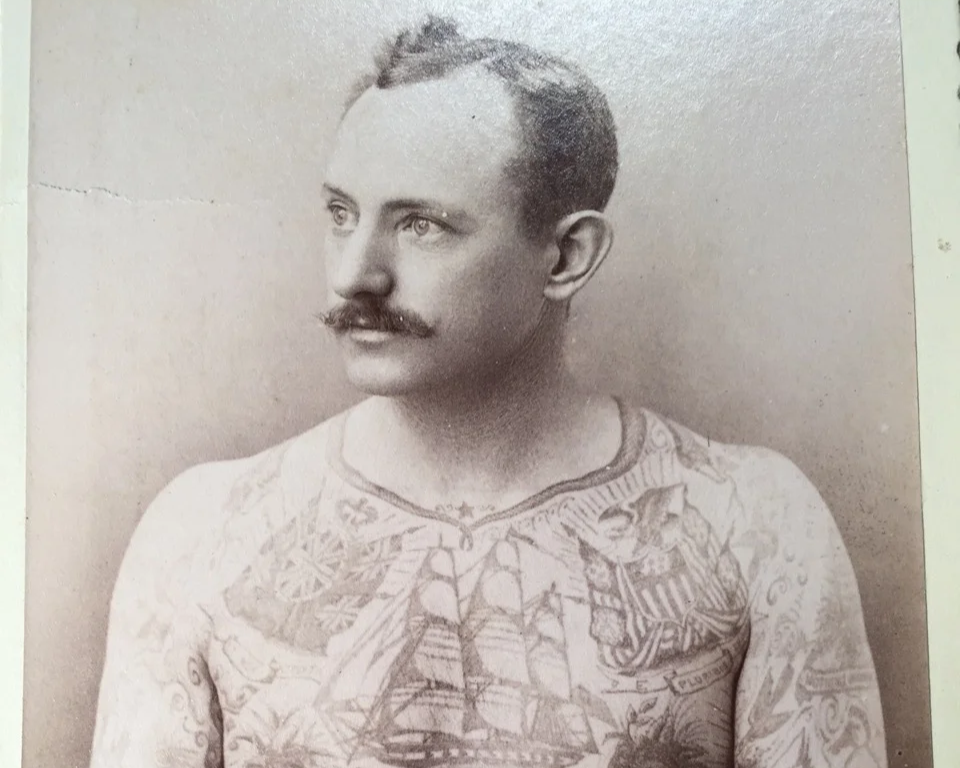
Martin Hidlebrandt
While tattooing has been a practice across many cultures throughout history, it wasn’t until industrialization in the US that its proliferation spread across the country. Part of that boom can be attributed to the practice of walk-in tattoos. Walk-in tattoos are a traditional service offered by many tattoo shops in the United States today, giving people the opportunity to walk in without an appointment and get tattooed at their convenience.
This practice can be traced back to one of the first tattoo shops in America, opened by Martin Hidlebrandt, one of the earliest recorded professional tattooers in the United States. As a German immigrant, Hildebrandt enlisted in the Navy, where he served on the USS United States from 1846 to 1849 and learned how to tattoo amongst sea dogs.
Hidlebrandt gained experience and exposure to new tattoo styles throughout his service. He was part of Matthew Perry’s expedition to Japan in the 1850s, a voyage largely responsible for the introduction of Japanese tattooing in American culture, and he served in the Army of the Potomac during the Civil War, refining his skills as he traveled to different camps tattooing soldiers. During the 1870s, Hidlebrandt opened a shop in a tavern on Oak Street in New York City and devoted himself to tattooing full-time.
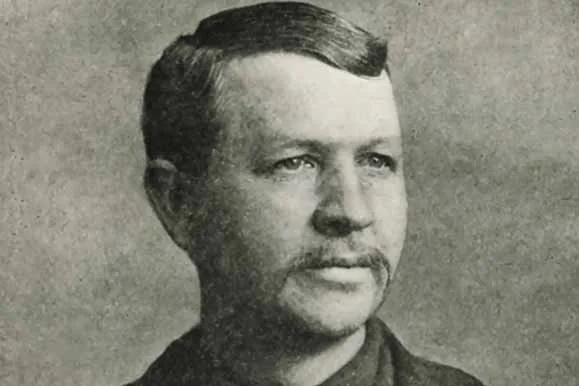
Samuel O'Reilly
As tattoos slowly rose in popularity, tattoo artists created different machines to prioritize speed and precision in their application. Samuel O'Reilly was one of many who experimented with engineering their own device. In 1891, O'Reilly patented the first electric tattoo machine. This modernization of the art form aided in an increased demand, allowing more tattoo artists to pursue dedicated careers in tattooing.
Artists began selling and buying pre-drawn designs known as “flash” to help keep up with the growth of tattooing. This practice became especially prevalent in carnivals, where artists would set up booths and hang their designs as advertisements for their embellishments. Designs were typically characterized by black outlines, limited palettes, and shading, creating the foundation for American traditional tattoos.
By the 20th century, tattoo studios were operating in major cities across the US. In 1936, 1 in 10 Americans were tattooed according to Life Magazine. For the working class, walk-in tattoos were the most common way of getting inked.
Walk-in tattoos became a tradition that’s stuck as time has moved forward, and many shops still provide their patrons with the opportunity today. Tattoo flash and walk-in tattoos have shaped the entire culture, paving the way for artists such as Lew Alberts, August "Cap" Coleman, Bert Grimm, Franklin Paul Rogers, Sailor Jerry and many more.